








Chapter 1
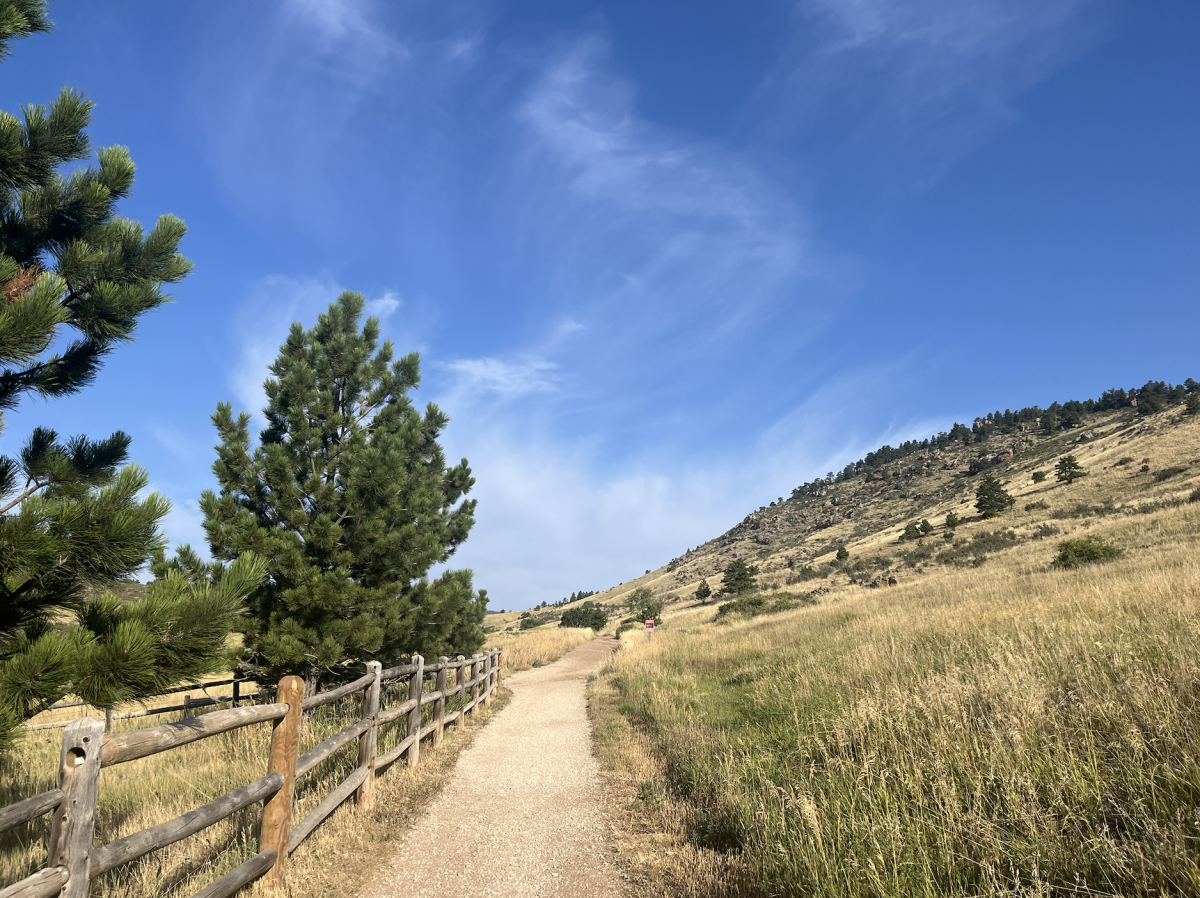
The air was dry and scorching hot in the area Jack rode. The sand-covered land was sparsely decorated, save for a few long dead bushes as well as tumbleweeds and cacti as far as the eye could see. Rolling sandy hills decorated the horizon.
Jack could tell that his horse–a dapple grey fifteen year-old Andalusian horse named Malcolm–was quite thirsty after his long travels. That, and exhausted, too. Thirsty and tired–common signs of fatigue. Unsurprising, considering they had ridden many miles over the healthy limit that a horse should ride.
Jack bent over slightly, giving his horse a pat. “Almost done, boy. Just a few more miles.”
That day, he and Malcolm had ridden around forty miles from Southern New Mexico to the “Welcome to Arizona” sign around two miles back. By Jack’s experience, he guessed the temperature to be in the late 80s, typical for the season of the desert area surrounding Tucson, Arizona.
Jack and Malcolm rode another mile before they came across a creek a ways off the road. Just barely after dismounting him, the horse ran for the water to take big gulps of pure rehydration.
Seeing the water slosh when Malcolm buried his face into it made Jack thirsty himself, despite Malcolm needing more water than humans because of their size, and Jack himself didn’t have to do much work, because Malcolm did most of the walking for him.
He grabbed his canteen, and put it in his mouth, in search of cool, refreshing water. Instead, he found two warm drops of it. He shook it. Nothing.
Well, that’s great, Jack thought. Now his only source of water was from the creek, and Jack, despite being a pioneer that has gone through harsher conditions and more desperate times, didn’t love the idea of sharing water that his horse drank from.
Luckily, Jack was an outdoor-loving pioneer with twenty years of experience; his dad his teacher.
Jack’s father was once a pioneer as he was, and knew how to get clean water. First, you had to actually find the source of water-preferably from a creek or river and collect it in a metal pan or canteen, then hang it over a campfire for thirty minutes, killing most bacteria and viruses found in unsanitary water. Then, let the water cool down to a safe temperature, usually roughly 110-120 degrees fahrenheit, and then drink away. Clear away any debris like rocks and pine needles as necessary.
Before his mother’s passing when Jack was eleven, his father was a respectable man and decent father. An owner of a large ranch, Mack Langston followed in his father’s footsteps as a ranch owner. And his only son, Jack, was made his cowhand.
But that was before his mother passed away from cholera in 1888, the same year a blizzard outbreak in the North killed hundreds and a deranged man terrorized London and killed five women.
Mack was devastated, showing intense symptoms of anxiety and depression; anxiety because there was now one less provider for the family, and depression because the love of his life was gone. Gone forever.
Mack’s friends recommended therapy. But instead of turning to a mental health care specialist, he turned to whiskey.
As his depression grew, so did his alcoholism. It only started out with him coming home late at night from the town saloon, drowning his sorrows in Kentucky bourbon.
But as his addiction started to spiral out of control, so did his sanity. He would sit in the living room some days, ordering his son to go milk the cows in slurred speech, and often dozing off there. An almost twelve year-old Jack wasn’t built for that kind of work, enough work for three people to spend seven hours on. That was almost an entire day of work, leaving only three to four hours to rest and sleep.
Sobriety was rare, and abuse became regular, physically and verbally. When Jack entered the house, Mack would stand up, swaying like the drunkard he was, and tell his boy to go back to work, that there was no time to relax (something he almost always did, nowadays) and to go groom the horses. When Jack said something even slightly disrespectful or contradicting, he would get smacked in the face, and his father would go on ranting about how he was a horrible son, how he was an “accidental” pregnancy, about how hard he would hit him if it happened again. It hurt Jack, it really did. In his mind and his body. Some days, he would bury his face in his hands while milking the cow, or shoveling horse crap, and sob. Sob, he did.
The last time Jack ever saw his miserable drunkard of a father was when he was sitting on the couch, with a half-empty bottle in his hand, staring at the ceiling. Typical routine, for the last five years. But when Jack came back roughly two in the morning, done with all his work, his father lay on the couch. He looked asleep… almost peaceful… but his chest didn’t rise and fall. There was no reaction to his name being called. Mack Langston was dead.
The doctor ruled his death as hypoxia due to asphyxiation… said he had fallen asleep, thrown up, and choked to death on his own puke. A bad, but unfortunately fitting way for him to go out.
Not long after, despite everything Mack had done to his son, Jack had buried him on the far edge of the property at the base of a hill–right next to his wife five years prior. The funeral was small… only a handful of people had come. Only Jack, along with the bartender, some of Mack’s old friends, Pastor Elias of the catholic church, and his brother from Michigan attended.
It was also around that time that Jack sold the ranch. For roughly fifteen thousand dollars, you could own a decent sized-ranch. You could also do what Jack did: use around two thousand of it to buy a tent, a bedroll, lots of canned food, a canteen; then spend three-hundred dollars on a red-roan Missouri fox trotter, whom he named Berry.
Berry was a good horse, but unfortunately died in 1907 from old age. Jack used the remainder of the money from selling the ranch to buy his current horse: a seven year-old dapple-grey Andalusian he named Malcolm.
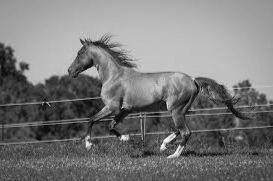
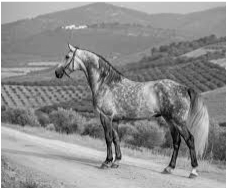
Red roan Missouri fox trotter, just like Berry. Dapple grey Andalusian, just like Malcolm.
Jack was about to continue his train of thought when the wind picked up.
Rapidly.